

The business side
SOCRATES2.0

Staged business building
Based on lessons learned and experiences from four pilot sites, multiple business ideas emerged for the SOCRATES2.0 Coordinated Approach cooperation model. First and foremost, trust needs to be built between partners before such cooperation can be effective.
The business-building process was structured by defining three stages: initiation phase, effort-driven business model and impact-driven business model.
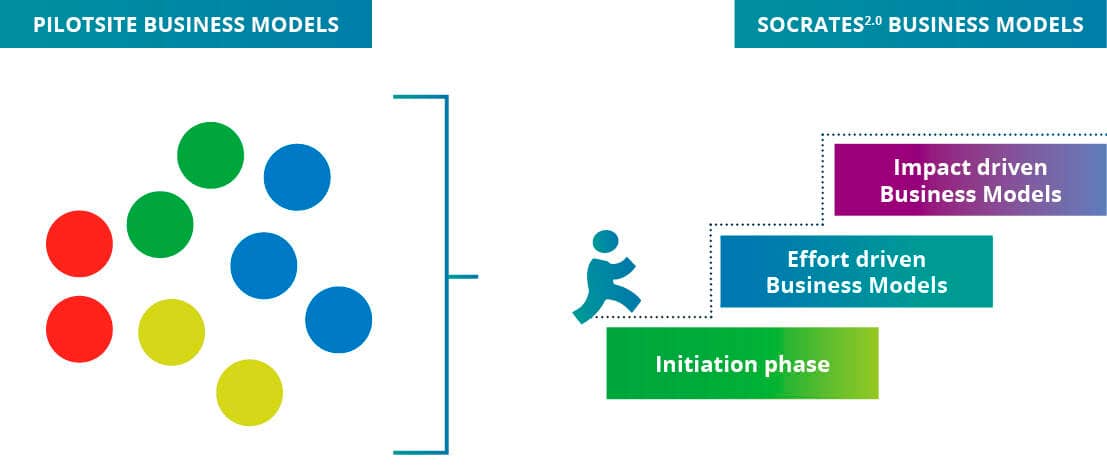
Initiation phase
This stage enables cooperation between partners who are not yet familiar with each other. At the start of a new cooperation, all the public and private organisations involved share their initial insights and knowledge of the problem or needs. They also introduce their proposals and available resources (e.g. services, systems) that can contribute to solving the problem. The decision to proceed with a cooperation should be based on a positive joint assessment that the sum (or combination) of the presented proposals and resources is valuable and contributes to the solution of the problem. When partners agree on the role distribution, the Strategy Table should be the first active role to start working on a shared vision, common goals and strategic KPIs.
The shared vision builds on the principle of creating benefits and new value for all stakeholders. The quantification and valuation of these benefits are the elements that define the ‘win’ for each of the stakeholders. To cover the initiation costs, a governmental subsidy or investment is advised.
Effort-driven business model
The effort-driven business model empowers an already initiated or established cooperation. The goal would be a more effective cooperation by aligning goals and services. It is assumed that the public road authority is the most suitable partner to lead the orchestration of the cooperation and ensures commitment for a longer period. The cooperation should also be transparent and open for newcomers. In order to reach sustainable cooperation, a legal framework is needed for governmental spending and procurement and keeping a level playing field for private companies.
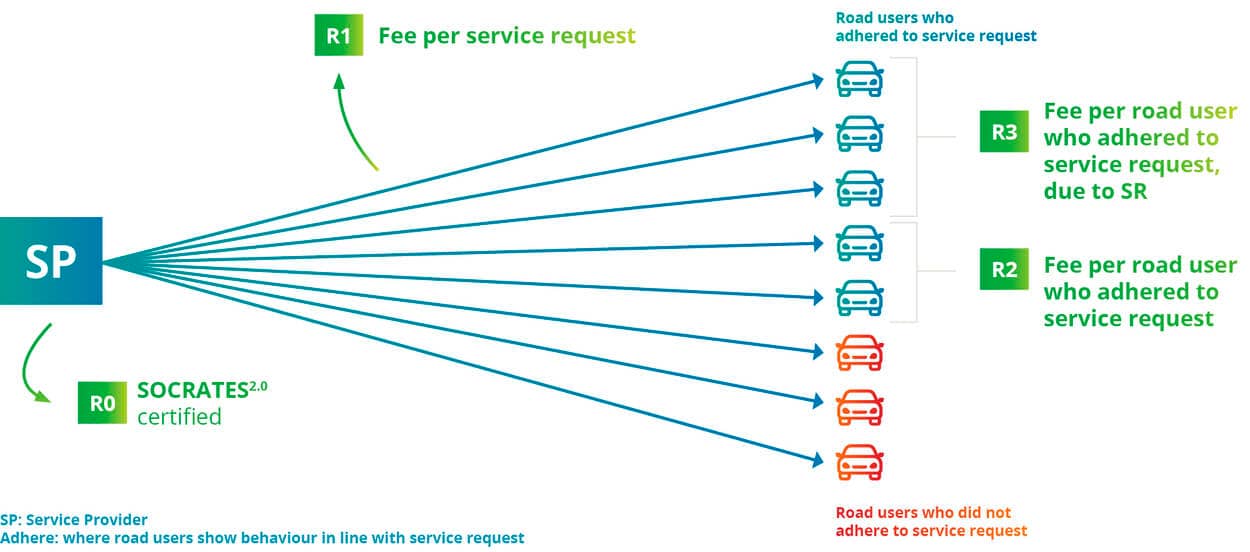
The main business case for private service providers is an effort-based reward for service requests. They receive compensation for sending coordinated advices to their users, regardless of the generated impact.
Impact-driven business model
This model supports sustainable cooperation for an effective and efficient execution of traffic management. The main goal of the cooperation is a common value proposition. All partners work closely together and maximise the added value for the whole chain.
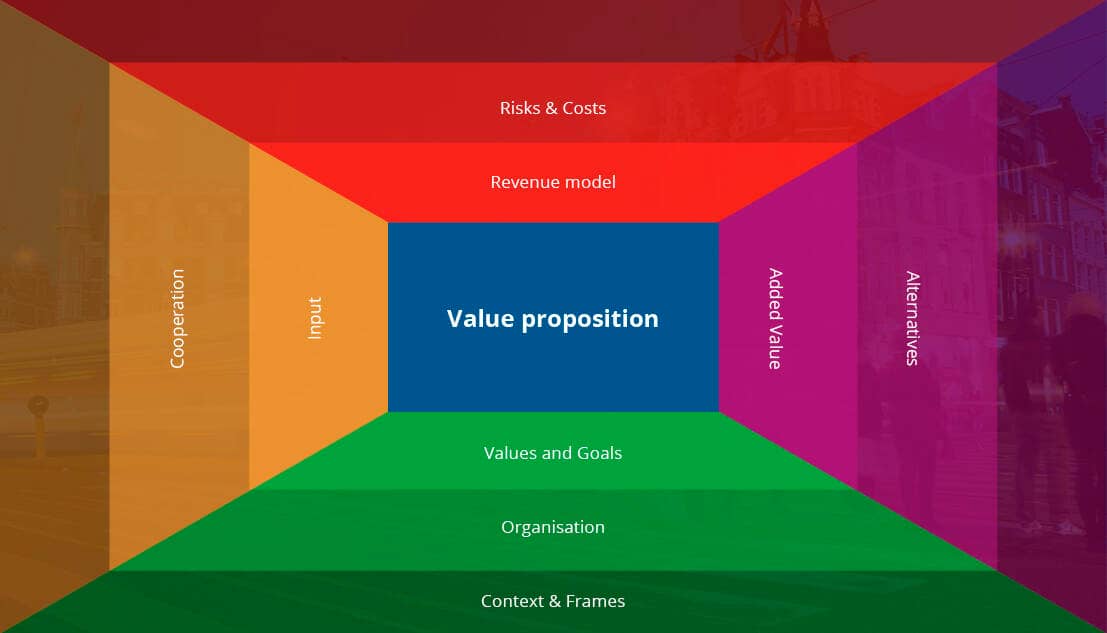
Starting with public goals, government investments are needed for the initiation. The main business case for private service providers is an impact-based reward for service requests. Compensation depends on measurable impact on traffic. This creates an incentive for service providers to maximise impact using re-routes, for example. It aligns the objectives of service providers with those of road authorities. Service providers can nudge or incentivise their users to increase follow-up behaviour and impact. Service providers are often better placed to create impact more effectively and cheaper, since they can target specific users and apply creative concepts like gamification.
Together with traffic management centres, a strong alignment of private and public services can be created. So, a large impact can be expected on public and private goals, making traffic management more cost-efficient and effective.